
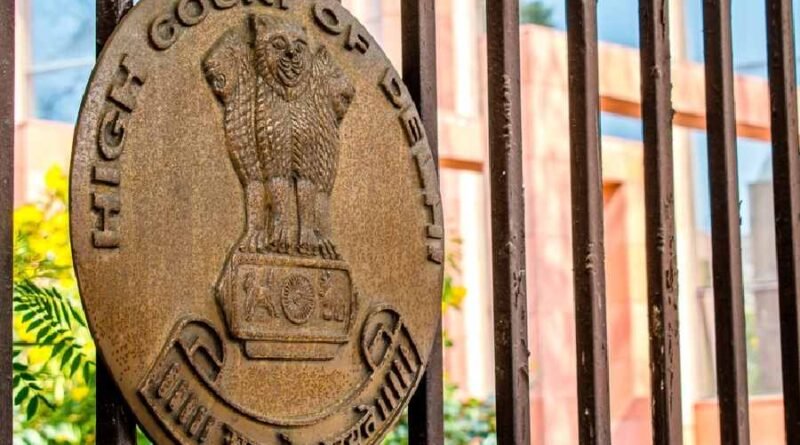
Delhi High Court admits restaurant appeals, keeps mandatory service charge ban in place
‘Notwithstanding the single judge having ruled against them, same practice still continue; it is the consumer who suffers’ says Justice Sanjay Sharma
New Delhi, November 20, 2026, dmanewsdesk: The Delhi High Court told the Centre on Thursday that it was free to act against restaurants that continued to add compulsory service charges to food bills. The bench admitted appeals by two industry bodies but clarified that it had granted no interim relief, leaving the earlier ruling in force.
“The ball is in your court. It is for you to take action, we can’t take action,” a bench of Acting Chief Justice Nitin Wasudeo Sambre and Justice Sanjay Sharma told the Centre’s counsel.
Additional solicitor general Chetan Sharma said some restaurants continued to levy the charge despite a single judge’s ruling against imposing it in a “camouflaged and coercive” manner. He told the bench that the restaurants had cited their pending appeals and could now point to their admission. The appellants had also sought interim relief, he said.
“Notwithstanding the single judge having ruled against them, they still continue with the same practice. Some of them and not all. It is the consumer who suffers,” Sharma argued.
“Where is the interim relief? Where is the interim relief in their favour? No, we have granted any interim relief,” the bench said.
The National Restaurant Association of India (NRAI) and the Federation of Hotels and Restaurant Associations of India (FHRAI) are challenging the March 28, 2025 judgment that held that a mandatory service charge on food bills amounted to an unfair trade practice. The division bench listed both appeals for hearing in the regular course.
Bench questions separate levy
The bench asked the associations’ lawyers why restaurants listed the service charge separately instead of including it in the price of food. One lawyer said the separate entry made the bill more transparent by showing customers how much went towards staff welfare.
“So the staff gets it and that is why it is segregated from the food bill. This has been an age-old practice and earlier it used to be a ‘tip’ which was paid in cash and used to go into the pocket of the waiter serving at the particular table,” he submitted.
The bench said customers had always had the discretion to decide whether to leave a tip.
“No, no, that was completely the discretion of the customer whether to pay tip or not. In foreign countries there are certain restaurants where they compel you (to pay). There is a rule that you must pay this much percentage of the bill as tip but in our country it is not so and there is no legislation to that effect,” it said.
What the restaurant bodies are challenging
The single judge dismissed the associations’ petitions against the Central Consumer Protection Authority (CCPA) guidelines, which prohibit hotels and restaurants from making service charges compulsory. The judge upheld the guidelines and directed each petitioner to deposit Rs 1 lakh with the CCPA towards consumer welfare.
The judge held that compulsory service charges ran against the public interest and undermined the economic and social fabric of consumers as a class. The judge called the practice a “double whammy” for consumers, who also had to pay Goods and Services Tax.
The NRAI has asked the division bench, among other questions, to decide whether a service charge disclosed on the menu and displayed elsewhere on the premises amounts to an unfair trade practice under the Consumer Protection Act, 2019.
The NRAI says it has 7,000 member restaurants in India and 2,500 member outlets in Delhi-NCR. The FHRAI says it represents the interests of 55,000 hotels and five lakh restaurants nationwide.
Source: The Telegraph online