
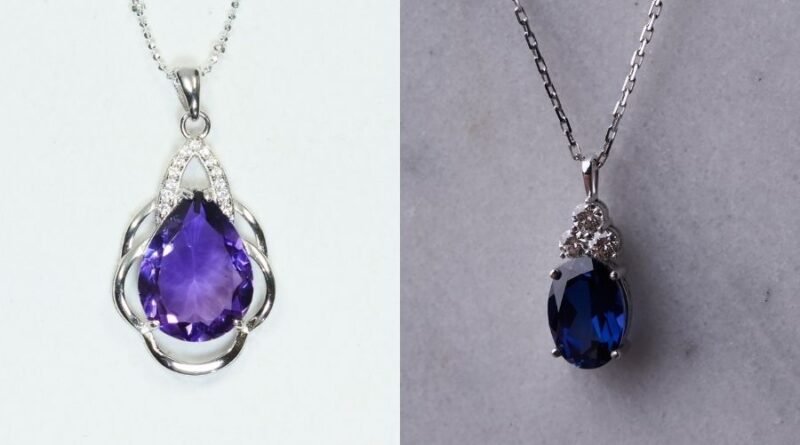
Tanzanite versus Sapphire: Kolkata jewellers explain the differences, demand and trends
Different colour characteristics, durability and availability affect the price and demand of the two gemstones
Kolkata, February 17, 2026, dmanewsdesk: Discovered in the 1960s in Tanzania, tanzanite has rapidly gained popularity in the gemstone market — sometimes even being mistaken for sapphire. While tanzanite is a gorgeous gemstone in its own right, known for its striking colour shifts in different lighting, understanding how it differs from sapphire is essential. My Kolkata spoke to industry experts to highlight the key distinctions, demand patterns and current trends surrounding the two stones.
How to tell tanzanite from sapphire?
Gemologically, sapphire belongs to the corundum family, while tanzanite is part of the zoisite family. This difference significantly influences their colour characteristics.
Tanzanite typically displays a blue-violet hue and is known for its pleochroism — the ability to shift between violet, blue and sometimes burgundy depending on lighting and viewing angles. Sapphire, on the other hand, is predominantly blue and exhibits a more stable, saturated hue.
“Tanzanite has a more fluid hue that shifts beautifully in different light, whereas sapphire shows a consistent, rich colour,” said Dhruv Jhaveri, director at Madanji Meghraj Jewellers on Ashutosh Mukherjee Road.
Durability is another major point of difference. Sapphire ranks significantly higher on the Mohs hardness scale, making it suitable for daily wear. Tanzanite, being softer, requires careful handling and protective settings.
“Sapphire is ideal for daily wear, whereas tanzanite requires mindful handling, especially in rings,” said Vijay Soni, director at Mahabir Danwar Jewellers on Park Street.
Which gemstone is more in demand?
According to jewellery sellers in Kolkata, tanzanite is more popular among the youth, while sapphire dominates the traditional market. Besides, sapphire is at times purchased for its perceived astrological value.
“Sapphire dominates the bridal and heirloom segment, while tanzanite is preferred for fashion luxury and occasion jewellery. Demand is therefore purpose-based rather than competitive,” explained Pratik Dugar, director at India Gem & Jewellery Creation on Park Street.
However, tanzanite’s single-source origin makes it a finite gemstone, and collectors increasingly view it as a future rarity.
Hence, as pointed out by Sandeep Soni of Mahabir Danwar Jewellers, tanzanite is an emotional purchase, which is often selected for uniqueness and individuality rather than investment.
Echoing similar thoughts, Jhaveri said, “Sapphire remains more in demand, especially in bridal and engagement jewellery, as buyers prioritise longevity, tradition and investment security. Tanzanite appeals more to collectors and younger buyers seeking distinctive statement pieces.”
Which gemstone is more valuable?
Although tanzanite is geologically rarer, sapphire holds greater market value due to its global recognition, greater durability and long-standing desirability in fine jewellery traditions, explained Bharti Bangur, owner of Bharti Bangur Fine Jewels in Alipore.
Tannista Basak of J.L. Basak Gems and Jewellers on Garanhata Street noted that Tanzanite’s demand has recently increased because it is significantly cheaper than sapphire. “In fact, we have run out of it [tanzanite]. We have sapphire in stock because it is more expensive. More people are buying tanzanite now, if it’s for fashion jewellery,” she said.
At J.L. Basak, sapphire retails at approximately Rs 6,000 per carat, while tanzanite is priced at around Rs 800 per carat.
What are the current trends in sapphire and tanzanite jewellery?
Sapphires are trending in classic solitaires (single stone jewellery) and wedding jewellery. Tanzanite, on the other hand, is gaining popularity in cocktail rings, evening accessories and contemporary occasion pieces.
According to Dugar, sapphire designs remain strong in heirloom-inspired jewellery, while tanzanite is favoured in minimal accessories and statement evening wear.
“Modern brides are pairing both — sapphire for the wedding ceremony and tanzanite for receptions and celebrations,” said Vijay Soni.
Source: The Telegraph online